Are Buyer Agents Still Getting Paid in California? The Complete 2025 Guide
Last Updated: December 17, 2025
If you’re buying a home in California right now, you’ve likely heard confusing news about real estate commissions. After the National Association of Realtors’ $418 million settlement and California’s new Assembly Bill 2992, many buyers wonder: are buyer agents still getting paid, and if so, who’s footing the bill?
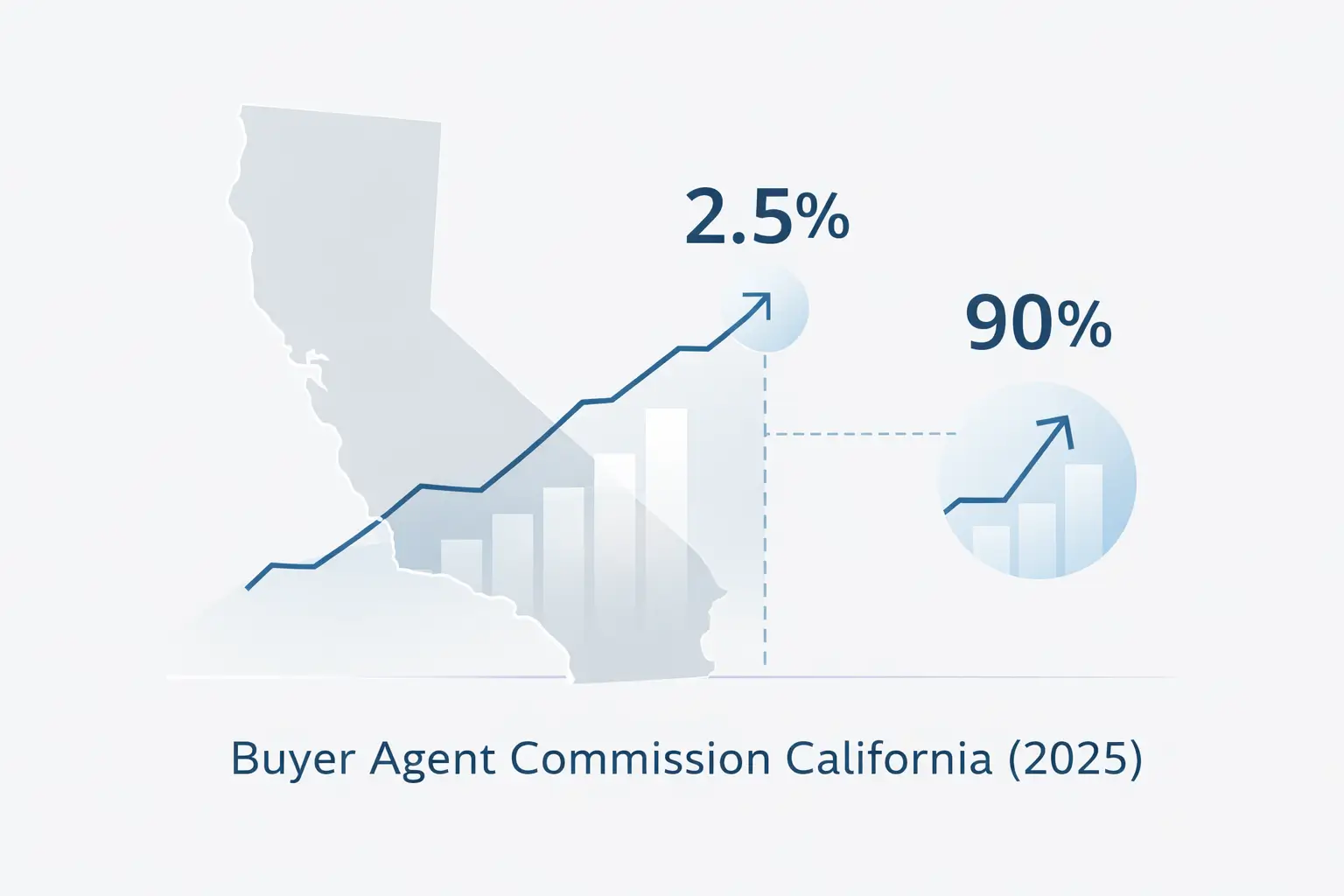
Here’s the short answer: Yes, buyer agents are absolutely still getting paid. According to June 2025 nationwide transaction data, buyer agent commissions have actually increased slightly, averaging 2.43% in 2025, up from 2.38% the year before. In California specifically, buyer agent commission California averages around 2.46% to 2.57% of the home’s sale price based on Clever Real Estate’s 2025 commission survey, and most importantly, sellers continue to pay these fees in roughly 90% of transactions.
TL;DR: Buyer Agent Commission in California (2025)
- Buyer agents are still getting paid — commission rates remain stable or slightly higher
- Average commission: ~2.46%–2.57% in California
- Buyers legally agree to pay, but sellers still cover it ~90% of the time via seller concessions
- Written buyer-broker agreements are mandatory under California AB 2992 (effective January 1, 2025)
- Commissions are negotiable and now part of the offer strategy, not hidden on MLS
- Who pays buyer agent commission in California: Legally the buyer, but practically negotiated with seller
This guide cuts through the confusion and explains exactly how buyer agent commission California works today, what changed in 2024 and 2025, and what you need to know as a California homebuyer.
What Actually Changed: The NAR Settlement and California’s AB 2992
The National Changes (August 17, 2024)
According to the NAR settlement documents, three major practice changes took effect on August 17, 2024. Real estate agents must now enter into written agreements with buyers before touring a home, these agreements must specify compensation details, and offers of compensation can no longer be advertised on Multiple Listing Service platforms.
Before August 2024, when a seller listed their home, the listing agreement typically included an offer of compensation for the buyer’s agent, which was openly displayed on the MLS. That practice ended with the settlement, fundamentally changing how buyer agent commission after NAR settlement works.
California’s Additional Requirements (January 1, 2025)
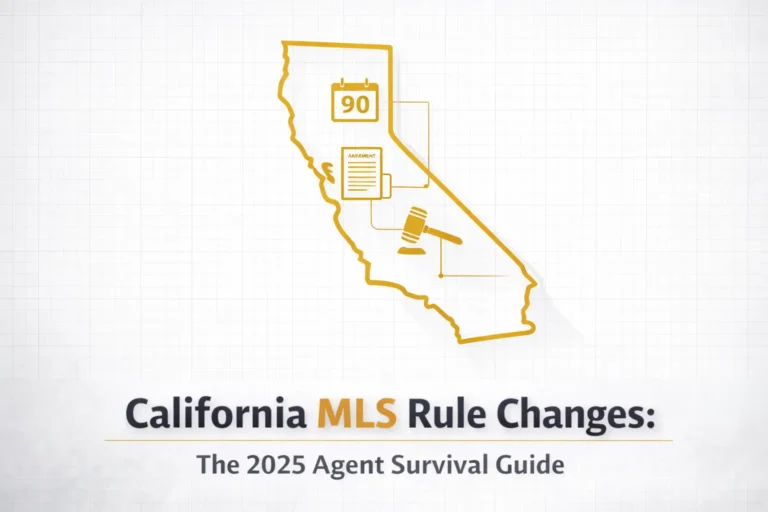
California went further than the national settlement. Assembly Bill 2992 took effect on January 1, 2025, requiring all buyer agents in California to sign a buyer representation agreement California law mandates with their clients as soon as practicable, but no later than when the buyer makes an offer to purchase property.
According to the California Department of Real Estate, AB 2992 expands requirements beyond MLS-listed properties to all properties, whether listed on an MLS or not, and applies to all real estate licensees in California.
Key requirements under the California buyer broker agreement (AB 2992):
- Written agreements required before agents can assist buyers with property searches or showings
- Agreements cannot exceed 90 days for individual buyers
- Automatic renewal clauses are prohibited
- Agreements must specify services provided, compensation amount, payment terms, and expiration date
- Agreements that don’t meet statutory requirements are void and unenforceable
Before vs. After: How Buyer Agent Commission Works
| Aspect | Before Aug 2024 | After 2025 |
|---|---|---|
| Buyer agent agreement | Optional | Mandatory (AB 2992) |
| Compensation disclosure | MLS advertised | Negotiated privately |
| Who pays | Seller (default) | Buyer legally, seller often via credit |
| Negotiation timing | After offer | Before touring homes |
| Agreement duration | No limit | Max 90 days in CA |
How Buyer Agent Commission California Works in 2025
Current Commission Rates
Based on Clever Real Estate’s 2025 commission survey, the average buyer agent commission California is 2.57%, while Anytime Estimate’s September 2025 data shows rates around 2.46%. According to Bankrate’s latest California real estate commission analysis, the total commission (covering both buyer and seller agents) averages around 5.03% to 5.18% of the sale price.
Here’s what that means in dollar terms for California homes:
Commission Examples by Price Point:
- $600,000 home: approximately $14,760 to $15,420 buyer agent fee
- $900,000 home: approximately $22,140 to $23,130 buyer agent fee
- $1,200,000 home: approximately $29,520 to $30,840 buyer agent fee
According to Anytime Estimate’s 2025 market analysis, commissions have increased slightly in recent months, with homes under $500,000 averaging 2.52% and luxury homes over $1 million averaging 2.21%.
Who Pays Buyer Agent Commission in California?
This is where the confusion comes in. Legally, the buyer is responsible for paying their agent’s commission under the new buyer-broker representation agreement. However, in practice, most sellers still cover this cost.
According to real estate agents working in California markets throughout 2025, sellers continue to pay buyer agent commissions in most cases because buyers can walk away if sellers refuse to pay. The slow housing market and elevated inventory levels give buyers leverage. If a seller won’t offer to cover the buyer agent fee, buyers can simply look for another property with a seller who will.
Three ways buyer agent commissions get paid:
- Seller concession (most common): The seller agrees to credit the buyer for the agent’s commission at closing. This is negotiated as part of the purchase contract.
- Direct payment by buyer: The buyer pays their agent directly at closing, in addition to their down payment and closing costs.
- Financed into the mortgage: In some cases, buyers can roll the agent fee into their mortgage if the lender allows, though this increases the total amount borrowed.
Breaking the Common Myths About Buyer Agent Compensation
Myth 1: Buyer Agents Aren’t Getting Paid Anymore
Reality: According to a June 2025 nationwide survey reported by real estate industry analysts, average combined buyer and seller agent commission increased from 5.32% to 5.44%, with buyer agents receiving an average of $9,818 on a median-priced home. Buyer agents continue working and earning commissions at rates similar to or slightly higher than before the settlement.
Myth 2: Commissions Have Crashed
Reality: Commission rates have remained remarkably stable. The biggest changes so far are that buyer agent agreements are signed earlier in the homebuying process and more discussions about commission rates are taking place. The feared collapse in compensation hasn’t materialized.
Myth 3: Sellers Are Refusing to Pay Buyer Agent Fees
Reality: Most sellers still offer to pay buyer agent commissions as a competitive strategy. According to experienced California agents interviewed in 2025, if you want to get your home sold in a market filled with cash-strapped buyers, offer to pay their agent fees. Refusing to pay can significantly reduce your buyer pool.
Myth 4: You Don’t Need a Written Agreement Anymore
Reality: In California, AB 2992 requires a written buyer representation agreement California law before an agent can assist a buyer in any way. This isn’t optional. The agreement protects both parties by clarifying expectations upfront.
What This Means for Different Types of Buyers
First-Time Buyers
You’ll need to understand the California buyer broker agreement before touring homes. Most first-time buyers successfully negotiate seller concessions to cover their agent fees, as sellers recognize you’re working with tight budgets.
Luxury Home Buyers
With higher purchase prices, you have more negotiating power. Many luxury buyers negotiate flat-fee arrangements instead of percentages, potentially saving thousands. On a $2 million home, negotiating a $30,000 flat fee instead of 2.5% ($50,000) offers significant savings.
Cash Buyers
Your strong negotiating position often translates to better terms. Sellers motivated by quick, guaranteed closes frequently agree to pay buyer agent commission California in full to secure cash offers.
FHA and Low-Down-Payment Buyers
Who pays buyer agent commission in California matters most to you. Since you have minimal cash reserves, negotiating seller concessions for agent fees is critical. Fortunately, most sellers continue offering these concessions to attract qualified buyers.
Real Estate Investors
You likely purchase multiple properties annually, which gives you leverage when negotiating buyer agent commission after NAR settlement. Consider negotiating volume discounts or flat fees with your agent.
What California Homebuyers Need to Know Right Now
Before You Start House Hunting
Expect to sign a buyer-broker agreement early. You’ll discuss compensation before you tour your first property and specify how much your agent will be paid (percentage or flat fee), whether you’ll pay out of pocket or request seller concession, what services your agent will provide, and how long the agreement lasts (maximum 90 days in California).
Know you can negotiate. Real estate commissions always have been negotiable. The new rules shift that responsibility to buyers, who now discuss buyer agent commission California rates directly with the agents representing them.
During Your Home Search
Commission is now part of the offer negotiation. When you make an offer on a California home, you’ll typically request that the seller provide a concession to cover your agent’s commission. This is written into the purchase agreement as a seller credit.
According to California real estate professionals, if the seller and buyer have not yet reached an agreement on terms, the buyer may walk away from the property and work with their agent to purchase another property with a seller willing to cover some or all of the buyer agent compensation.
You have exit options. The buyer will remain financially responsible for compensating their agent unless the signed buyer-broker representation agreement contains an exit clause or the buyer’s broker relieves the buyer of their obligation to pay.
Negotiation Strategies for California Buyers
1. Research typical rates in your market
In expensive California markets like San Francisco or Los Angeles, agents may accept slightly lower percentage rates because the dollar amount is substantial. A lower combined commission of 5% on a $1.5 million property might be negotiable because the total dollar amount is already high.
2. Consider flat-fee arrangements
Some buyers negotiate flat fees instead of percentages, particularly for higher-priced homes. A $20,000 flat fee might be more attractive than a 2.5% commission on a $1.2 million home (which would be $30,000).
3. Understand the value proposition
According to real estate transaction analysis, the top 5% of agents in California sell homes for as much as 10% more than the average agent. A skilled buyer’s agent can save you far more than their commission through expert negotiation and avoiding costly mistakes.
4. Time your market entry
Market conditions favor buyers currently, as inventory continues to build and homes are selling slowly, giving buyers leverage to request sellers pay their agent commissions. In a seller’s market, you’ll have less negotiating power.
5. Get everything in writing
Make sure your California buyer broker agreement specifies exactly what happens if the seller won’t pay your agent’s fee to avoid misunderstandings or legal disputes.
6. Don’t lowball experienced agents
According to top California agents, if you offer lower than 2.5% commission, there’s a risk a buyer’s agent might try to avoid showing a listing. Offering market-rate compensation attracts more agents to show your target properties.
The Seller’s Perspective: Why Most Still Pay Buyer Agent Fees
“In our 2025 transactions, sellers continue to cover buyer agent fees because buyers simply won’t absorb them in today’s market,” says a Southern California broker with over 20 years of experience. “It’s become part of our standard negotiation strategy.”
Sellers continue offering to pay buyer agent commissions when they’re no longer required for two strategic reasons: attracting more buyers and competitive positioning.
When sellers offer to pay the buyer agent commission as a concession, they make their property accessible to buyers who can’t afford to pay their agent out of pocket on top of their down payment. In California’s expensive housing market, homes compete for qualified buyers. A property that requires buyers to pay their own agent fees is immediately less attractive than comparable homes where sellers cover those costs.
For an $800,000 California home, the average combined realtor fee is $41,400 split between listing and buyer agents according to commission data. Sellers factor this into their listing price, and in many cases, they’re willing to pay it to ensure a smooth, quick sale.
Red Flags to Watch For
For Buyers
Agents who won’t provide written agreements: Under California law, agreements that violate AB 2992 provisions are void and unenforceable. Any agent refusing to use proper written agreements is violating state law.
Pressure to commit long-term: California law limits buyer-broker agreements to 90 days for individual buyers. Be wary of agents pushing for longer terms or automatic renewals.
Unclear fee structures: Your agreement must clearly specify how your agent gets paid. Agents should not claim there is a standard rate, as commissions are fully negotiable under California law.
For Sellers
Agents suggesting you skip buyer agent offers: While legally you don’t have to offer buyer agent compensation, experienced agents recommend doing so in most market conditions. An agent pushing you not to offer it may not understand current buyer expectations.
Real-World Scenarios: How This Works in Practice
Scenario 1: First-Time Buyer in Los Angeles
Sarah is buying her first condo for $750,000. She signs a buyer representation agreement California law requires with her agent for 2.5% commission ($18,750). When she makes an offer, she requests the seller provide a credit for this amount at closing. The seller agrees because three other similar condos in the building are also for sale, and the seller wants to stay competitive. Sarah pays nothing out of pocket for her agent.
Scenario 2: Cash Buyer in San Diego
Mike is buying a $1.2 million home with cash. He negotiates a flat-fee arrangement with his buyer’s agent for $20,000 instead of the 2.5% ($30,000) that would be typical. The seller is motivated and agrees to credit Mike $20,000 at closing. Mike saves $10,000 compared to a percentage-based agreement.
Scenario 3: Tight-Budget Buyer in Sacramento
Jennifer is buying a $500,000 home with a minimal down payment. She signs an agreement with her agent for 2.5% ($12,500). Her offer includes a seller concession for the full amount, but the seller counters, offering to pay only 2% ($10,000). Jennifer negotiates with her agent, who agrees to accept the $10,000 to close the deal.
Frequently Asked Questions About Buyer Agent Commission California
Do I have to use a buyer’s agent in California?
No, you can purchase a home without representation. However, according to NAR data, approximately 88% of buyers use agents, and most buyers benefit from professional guidance through California’s complex real estate laws and disclosure requirements.
Can I negotiate my buyer agent’s commission?
Yes. All commissions are negotiable in California. Your buyer-broker representation agreement should clearly state the compensation terms, and buyer agent commission California rates vary based on negotiation.
What if I want to see a home but already have an agent agreement with someone else?
You remain financially responsible for compensating your original agent unless the agreement contains an exit clause or your broker relieves you of the obligation. Review cancellation provisions before signing.
Are buyer agent commissions tax deductible?
Generally no for primary residences. Buyer agent commissions are typically added to your cost basis, which may reduce capital gains when you sell. Consult a tax professional for specifics.
Can I ask the seller to pay more than the standard rate?
You can request any amount, but sellers aren’t obligated to agree. Your seller concession request becomes part of overall purchase negotiations.
What happens if I cancel my buyer-broker agreement early?
This depends on your specific agreement terms. Under AB 2992, agreements cannot exceed 90 days and automatic renewals are prohibited. Check for early termination provisions.
Do I need a new agreement for every property I tour?
No. One buyer-broker representation agreement covers all properties you view during the agreement period (up to 90 days).
Can my agent receive more than we agreed to in our contract?
No. According to California real estate regulations, whatever compensation you and your agent agree upon serves as the maximum the agent may receive from any source.
What if the seller offers to pay less than my agent’s fee?
You have three options: pay the difference yourself, negotiate with your agent to accept less, or find a property with better terms.
Are there different rules for new construction in California?
AB 2992 applies to all property types, including new construction. However, builders may have their own buyer agent compensation policies.
How do I know if my agent is worth their commission?
Look for agents with deep local market knowledge, strong negotiation skills, and comprehensive services. Research shows top-performing agents achieve significantly better outcomes.
Can I work with different agents for different properties?
Only if your buyer-broker agreement has ended or includes provisions allowing this. Most agreements are exclusive during the term.
Legal Disclaimer: This article is for informational purposes only and does not constitute legal or tax advice. Real estate laws and practices vary by transaction and change over time. Always consult a licensed California real estate professional or attorney for guidance specific to your situation.
The Bottom Line: Buyer Agents Are Still Getting Paid
Despite the significant regulatory changes in 2024 and 2025, buyer agent commission California remains a thriving part of the real estate industry. According to market data through Q4 2025, buyer agents continue earning compensation at rates similar to or slightly higher than before the NAR settlement and AB 2992.
The biggest shifts aren’t in whether agents get paid, but in how the process works. More transparency through written agreements signed early creates clear expectations. Buyers now actively negotiate their agent’s compensation. Multiple flexible payment options exist for handling commission payments. And most sellers still offer commission as a competitive advantage.
For California homebuyers, this means you have more control over your agent relationship and compensation arrangements, but you also need to educate yourself about your options and obligations. The written buyer representation agreement California law requires ensures everyone understands the terms upfront, reducing confusion and conflicts later.
As the market continues adapting to these changes, one thing is clear: professional buyer representation remains valuable, buyer agents are still working and getting paid, and sellers largely continue covering these costs to keep their properties competitive.
Take Action: Your Next Steps
Ready to navigate California’s new buyer agent landscape? Here’s what to do:
Interview multiple agents: Talk with at least three buyer’s agents about their services, experience, and buyer agent commission California expectations. Ask about their knowledge of local market conditions and recent transactions.
Understand the agreement before signing: Read the buyer-broker representation agreement carefully, paying special attention to compensation terms, service descriptions, duration, and cancellation provisions. If you need help understanding buyer-broker agreements or negotiating commission terms in your specific California market, speak with a local expert before signing anything.
Get pre-approved before house hunting: Knowing your budget helps you negotiate both your home price and agent compensation more effectively.
Research market conditions: Understanding whether you’re in a buyer’s or seller’s market affects your negotiating position on agent compensation and seller concessions.
Communicate openly with your agent: The new regulations promote transparency. Ask questions, discuss concerns, and ensure you’re both aligned on expectations regarding who pays buyer agent commission in California for your specific transaction.
The California real estate market has changed, but buyer agents remain an integral part of successful home purchases. By understanding how buyer agent commission after NAR settlement works in 2025, you’ll be better positioned to make informed decisions and navigate your home purchase with confidence.