Risk Management for Real Estate Brokers 2025: Complete Compliance & Protection Guide
Last updated: December 15, 2025
The landscape of risk management for real estate brokers in 2025 has fundamentally changed. Between the NAR settlement implementation, new state-level legislation, ongoing buyer-side commission litigation, and emerging cybersecurity threats, brokers face compliance obligations that didn’t exist 18 months ago. This guide provides a comprehensive framework for identifying, mitigating, and managing the critical risks confronting your brokerage today.
The 2025 Risk Landscape: What’s Changed and Why It Matters
Quick Answer for Brokers: In 2025, brokers must obtain written buyer representation agreements before any property showing, disclose exact commission terms, and document supervision procedures to comply with NAR settlement rules, new state legislation, and ongoing antitrust litigation exposure.
Risk management for real estate brokers 2025 requires understanding three fundamental shifts:
The NAR Settlement Reality: Following the $418 million Sitzer-Burnett settlement in March 2024, two core practice changes took effect August 17, 2024. Brokers can no longer advertise buyer agent compensation on MLS systems, and buyer agents must secure written representation agreements before showing properties.
State-Level Legislative Activity: New York enacted three significant laws affecting broker operations: the Freelance Isn’t Free Act (FIFA, effective May 20, 2024), the Fair Chance for Housing Act (effective January 19, 2025), and the FARE Act (effective June 11, 2025).
Active Litigation Continues: Despite the homeseller commission settlement, buyer-side commission lawsuits remain active. Cases including Batton 1 and 2, Davis v. NAR, and Lutz v. Keller Williams continue through courts, creating ongoing antitrust exposure. The Department of Justice reopened its antitrust investigation following an April 2024 DC Circuit Court ruling.
Seven Critical Risk Categories Every Broker Must Address
Broker Risk Readiness Scorecard (2025)
Use this self-assessment to identify your exposure level:
| Risk Management Area | Yes | No |
|---|---|---|
| Buyer agreements signed before every showing | ☐ | ☐ |
| Commission amounts disclosed in dollar terms | ☐ | ☐ |
| Written supervision manual updated in 2025 | ☐ | ☐ |
| Quarterly transaction audits documented | ☐ | ☐ |
| FIFA-compliant IC agreements in place (NY) | ☐ | ☐ |
| Cyber insurance active + wire fraud protocol | ☐ | ☐ |
| E&O policy covers antitrust claims | ☐ | ☐ |
| Fair housing training completed in 2024-2025 | ☐ | ☐ |
Your Risk Level:
- 0-2 No’s → Low risk exposure (maintain current practices)
- 3-4 No’s → Moderate risk (prioritize gaps within 60 days)
- 5+ No’s → High regulatory & litigation exposure (implement 90-day emergency plan)
1. Regulatory Compliance Risk
Regulatory compliance risk means potential penalties, fines, or license suspension from failure to comply with state licensing laws, federal housing regulations, and NAR settlement requirements.
2025 Exposure Points:
- NAR settlement violations (showing properties without buyer agreements)
- State licensing supervision failures (New York requires “regular, frequent and consistent personal guidance” per 19 NYCRR § 175.21)
- Fair housing violations
- Advertising compliance failures
Mitigation Framework:
Create a written compliance manual covering all regulatory obligations. New York Department of State guidance from October 2024 requires brokers to document supervision policies including transaction review procedures, office meeting schedules, and complaint resolution processes.
Implement quarterly compliance audits reviewing 10-15% of closed transactions. Check for completed disclosure forms, buyer representation agreement timing, commission disclosure accuracy, and advertising compliance.
Designate a compliance officer or assign this role to an experienced office manager.
Cost Reality: A compliance audit program costs approximately $2,000-$5,000 annually. New York license law violations carry penalties from $1,000 per violation to license suspension. A single supervision failure can trigger Department of State investigations costing $10,000+ in legal fees.
2. Antitrust and Commission Litigation Risk
Quick Answer: Buyer-side commission lawsuits remain active despite the NAR settlement. Brokers face antitrust exposure from steering allegations, inadequate compensation disclosure in buyer broker agreements, and pressure tactics for agreement execution.
Antitrust risk means exposure to lawsuits alleging anticompetitive practices, particularly related to commission structures and buyer representation.
Active Litigation Context:
The Sitzer-Burnett settlement resolved homeseller claims but excluded buyer claims. Four major buyer-side cases remain active as of December 2024: Batton 1 & 2, Davis v. NAR, Lutz v. Keller Williams, and Howard Hanna. These cases collectively name hundreds of brokerages as defendants.
Three Specific Exposure Areas:
Steering allegations: If buyer agents showed properties based on commission levels rather than client needs, this creates litigation risk. Document all property selection rationale based on buyer criteria.
Inadequate commission disclosure: If buyer representation agreements don’t clearly explain compensation sources and amounts, brokers face breach of fiduciary duty claims.
Pressure tactics for agreement execution: If agents pressure buyers into signing representation agreements through misrepresentation, this creates fraud exposure.
Risk Mitigation Strategies:
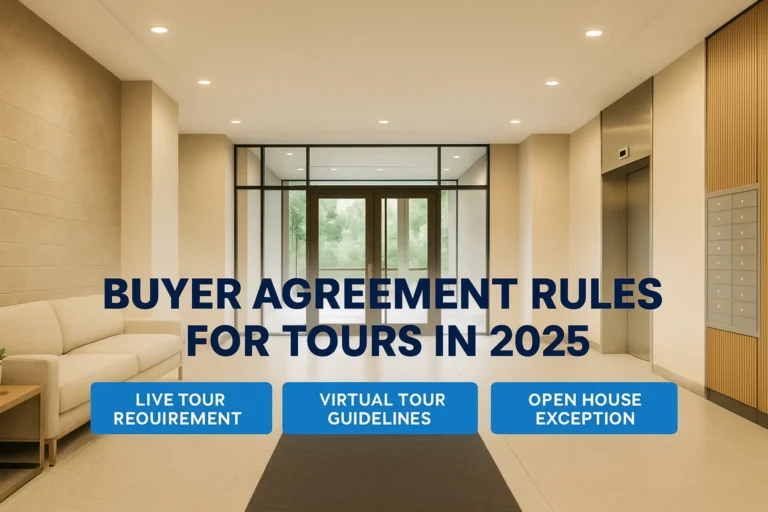
Implement mandatory buyer representation agreements before any property showing. Train agents that “before showing” means before unlocking a door, before a virtual tour, before any property-specific advice.
Require commission amount disclosure in agreements. Use plain language: “You will pay me 2.5% or $X, which may be reduced if the seller pays part of my compensation.”
Document all property selection conversations in your CRM.
Review errors and omissions insurance for antitrust coverage. According to Insurance Journal reporting from November 2024, many standard E&O policies exclude antitrust claims.
Real Scenario: A buyer agent shows only listings offering 2.5-3% buyer broker agreement compensation and avoids lower-fee properties without documenting buyer preferences. The buyer later sues, alleging steering based on MLS compensation disclosure patterns. Without CRM notes or documented criteria, the brokerage faces antitrust exposure despite having a signed agreement.
Litigation Cost Reality: Defense costs in commission litigation average $150,000-$300,000 per defendant. Compass settled for $57.5 million (November 2024), eXp for $34 million (October 2024).
3. Supervision and Agent Management Risk
Supervision risk arises from inadequate oversight of affiliated agents, including vicarious liability for agent misconduct.
New York Statutory Framework:
Licensed brokers must provide “regular, frequent and consistent personal guidance, instruction, oversight, and superintendence” to all associated agents (19 NYCRR § 175.21). This is an enforceable legal standard.
Mandatory Supervision Components:
- Written policies: Create a broker policy manual covering transaction procedures, advertising approval, disclosure obligations, and complaint handling. Update annually.
- Regular office meetings: Conduct minimum monthly meetings covering legal updates. Document attendance.
- Transaction audits: Review completed transactions systematically. The Long Island Board of REALTORS® recommends reviewing 100% of transactions in offices under 20 agents, and 20-30% in larger offices.
- Complaint handling protocol: Document all complaints in a central log including complaint date, nature, investigation steps, and resolution.
4. Independent Contractor Compliance Risk
Quick Answer: New York’s Freelance Isn’t Free Act requires written independent contractor agreements specifying compensation and payment timing (30 days post-closing), with penalties up to $25,000 for retaliation violations.
Misclassification risk and penalties from treating agents as independent contractors while exercising employee-level control, particularly under freelance worker protection laws.
The FIFA Impact (New York):
Effective May 20, 2024, New York’s Freelance Isn’t Free Act applies to independent contractor relationships worth $800 or more.
Key Requirements:
- Written contracts specifying services, compensation, and payment timing
- Payment within 30 days of work completion (closing date for real estate)
- Anti-retaliation protections for agents
Penalties: Double damages, attorney fees, and civil penalties up to $25,000 for retaliation.
Compliance Steps: Review all IC agreements to ensure FIFA compliance. Update commission disbursement to guarantee payment within 30 days post-closing. Train staff on anti-retaliation provisions.
5. Fair Housing and Discrimination Risk
Liability from discriminatory practices in housing transactions, including violations of federal Fair Housing Act and state laws.
The Fair Chance for Housing Act (New York):
Effective January 19, 2025, this act prohibits housing discrimination based on arrest records or criminal convictions with specific exceptions.
Key Provisions:
Landlords and agents cannot inquire about criminal history until after a conditional offer of housing (meaning the applicant meets all non-criminal criteria).
Rejections based on criminal history require written explanation citing specific convictions.
The law prohibits blanket policies like “no felony convictions.”
Penalties: Fines up to $1,000 for first violations, $2,000 for subsequent violations, plus discrimination complaints.
Mitigation Strategies:
Update rental application forms to remove criminal history questions from initial applications.
Train agents on Fair Chance requirements and provide scripts for explaining the law to landlords.
Implement transaction review processes checking fair housing compliance.
Real Scenario: A rental agent includes criminal background questions on the initial application form and screens out applicants with any conviction history before evaluating income or credit. An applicant files a Fair Chance Act complaint. The brokerage faces $2,000 fines per violation plus potential discrimination claims, even though the agent believed they were protecting landlord interests.
Federal Fair Housing: The Fair Housing Act prohibits discrimination based on protected classes. According to HUD penalty schedules updated for 2024, first-time violations result in penalties up to $25,000, increasing to $130,000 for violations within seven years.
6. Technology and Cybersecurity Risk
Quick Answer: Real estate wire fraud resulted in over $350 million in losses in 2024. Brokers must implement email authentication, wire verification protocols, encrypted communication, and cyber liability insurance to prevent business email compromise attacks.
Exposure from data breaches, cyberattacks, and unauthorized access to client information.
The Cybersecurity Landscape:
According to FBI Internet Crime Complaint Center data from 2024, real estate fraud resulted in over $350 million in reported losses, with business email compromise attacks specifically targeting transactions.
Common Attack Vectors:
- Email compromise with fake wire transfer instructions
- Ransomware encrypting brokerage systems
- Data breaches exposing client information
Minimum Cybersecurity Stack for Brokers (2025):
- ✓ SPF, DKIM, DMARC email authentication enabled
- ✓ Wire verification by phone using known numbers only
- ✓ Encrypted document sharing platforms (not email attachments)
- ✓ Cyber E&O liability policy active ($1M minimum coverage)
- ✓ Multi-factor authentication on all systems
- ✓ Quarterly phishing training for all staff
Real Scenario: A transaction coordinator receives an email appearing to be from the closing attorney with “updated wire instructions.” The email address differs by one character from the legitimate address. The coordinator sends the instructions to the buyer without phone verification. The buyer wires $385,000 to a fraudulent account. The brokerage faces an E&O claim for inadequate real estate wire fraud prevention protocols, and the cyber insurance carrier denies coverage because no authentication procedures were documented.
Cost Reality: Cyber liability insurance costs $2,000-$5,000 annually for $1 million coverage according to Marsh McLennan 2024 reporting. A single wire fraud incident averages $150,000-$400,000 in losses.
7. Climate Risk and Environmental Disclosure
Emerging liability related to climate change impacts on properties, including flooding and wildfire risk.
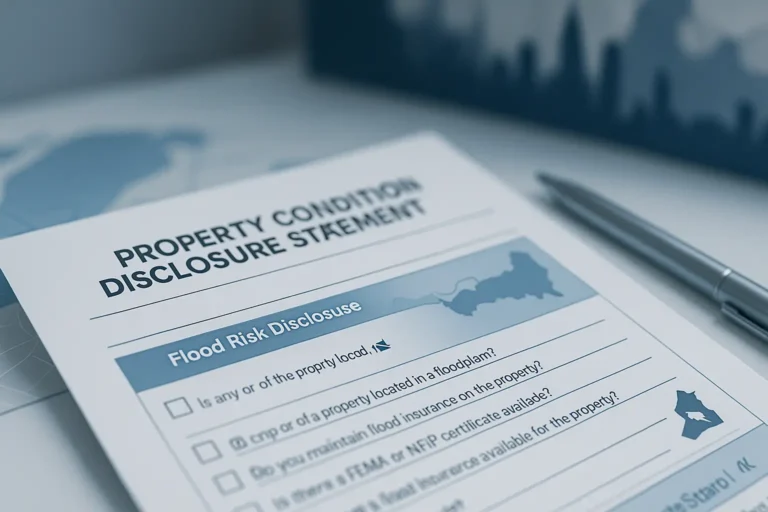
According to First Street Foundation’s 2024 analysis, approximately 14.6 million US properties face substantial flood risk not reflected in FEMA maps, creating disclosure obligations.
Mitigation: Incorporate climate risk research into listing procedures. Check FEMA flood maps and risk assessments. Include climate risk discussion in buyer consultations. Document all climate risk communications.
The FARE Act: New York Rental Fee Regulations
Effective June 11, 2025, New York’s FARE Act prohibits landlords and agents from charging most rental fees to tenants. Landlords must pay all broker fees. Tenants can only be charged background checks (capped at $20), application fees ($20 maximum), and security deposits (one month maximum). Violations result in penalties of $1,000-$2,000 per violation.
Compliance: Update rental listing agreements specifying landlords pay broker compensation. Train agents on prohibited fee structures. Review application forms to ensure fees don’t exceed statutory caps.
Building Your Risk Management Program
Risk Assessment Matrix
Categorize risks by likelihood and impact:
High Priority: NAR settlement compliance, supervision failures, IC misclassification, fair housing violations
Medium Priority: Cybersecurity breaches, environmental disclosure failures, commission litigation exposure
Essential Program Components
Written Policies Manual: Document transaction procedures, disclosure requirements, advertising compliance, commission structures, and complaint handling.
Insurance Coverage Review: Verify E&O coverage includes antitrust claims ($1 million minimum), plus cyber liability, general liability, and workers compensation.
Training Program: Implement structured onboarding (20-40 hours beyond licensing) and quarterly continuing education.
Transaction Audit Process: Review files monthly or quarterly using a standardized checklist covering buyer agreement timing, disclosure completion, commission accuracy, and fair housing compliance.
90-Day Implementation Plan
Weeks 1-2: Conduct risk assessment, review policies for gaps, evaluate insurance coverage
Weeks 3-4: Draft/update policies manual, create NAR compliance procedures, update IC agreements
Weeks 5-8: Conduct all-hands training on updated policies, deliver NAR settlement training, implement scenario exercises
Weeks 9-10: Integrate buyer agreement requirements into workflow, update forms, establish audit procedures
Weeks 11-12: Conduct first audit cycle, address issues, gather feedback, make adjustments
Ongoing: Monthly audits, quarterly policy reviews, annual insurance reviews, continuous training
Cost Analysis: Investing in Risk Management
One-Time Implementation: $4,500-$12,000 (legal review, training development, forms updates)
Ongoing Annual Costs: $12,000-$30,000 (training, audits, policy updates, insurance premiums, compliance tools)
Avoided Costs:
- Fair housing complaint defense: $15,000-$40,000
- E&O claim deductible: $5,000-$25,000
- Supervision investigation: $10,000-$30,000
- Antitrust litigation settlement: $50,000-$500,000+
- FIFA violation penalties: Up to $25,000
A single prevented claim typically pays for years of risk management investment.
Common Risk Management Mistakes Brokers Make in 2025
Understanding what doesn’t work is as important as knowing what does. Here are the most frequent errors that create unnecessary brokerage supervision liability:
Assuming E&O Covers Antitrust: Most standard errors and omissions policies exclude antitrust claims or have E&O antitrust exclusions. Brokers discover this gap only after receiving lawsuit notices. Always verify antitrust coverage explicitly or secure separate coverage.
Treating Buyer Agreements as “Paperwork”: Many brokers view buyer representation agreements as administrative requirements rather than legally binding contracts that establish fiduciary duties and compensation terms. This mindset leads to rushed signings, vague commission language, and inadequate explanation of terms—all creating litigation exposure.
Over-Supervising Independent Contractors: In attempting to comply with brokerage supervision requirements, some brokers exercise employee-level control over agents (mandatory office hours, required meeting attendance, controlled client assignments). This creates independent contractor misclassification risk under FIFA and similar laws. Balance supervision obligations with IC autonomy.
Ignoring Climate Disclosures: Brokers assume “everyone knows” about flood zones or wildfire risk, so they skip formal disclosure. Courts increasingly find this inadequate. Material environmental risks require explicit disclosure regardless of whether buyers “should have known.”
Delaying Compliance Until Enforcement: Many brokers wait until they receive a complaint or investigation notice before implementing compliance programs. This reactive approach costs more in legal fees and settlement amounts than proactive compliance investment.
Frequently Asked Questions
What are the most critical compliance obligations for brokers in 2025?
The NAR settlement requirements stand as your highest priority. You must obtain written buyer representation agreements before showing properties and cannot advertise buyer compensation on MLS. Beyond this, state-specific legislation varies—New York brokers must comply with FIFA, Fair Chance, and FARE Act requirements.
Do I need buyer representation agreements for every property showing?
Yes. The NAR settlement requires written agreements “before the buyer tours a home with the buyer’s agent.” This means before unlocking a door, before virtual tours, before property-specific advice. The only exception is open houses where visitors can walk through without agreements.
How specific must commission amounts be in buyer representation agreements?
Best practice includes stating either a percentage or dollar amount: “You agree to pay me 2.5% of the purchase price” or “$15,000, which may be reduced if the seller pays part of my compensation.” Vague language creates litigation risk.
Can I still practice dual agency in New York?
Yes, but with extensive disclosure requirements. New York permits dual agency with informed written consent from both parties, disclosed before either party shares confidential information. Many brokers minimize dual agency by referring one party to another agent (designated agency).
What supervision obligations do I have for independent contractor agents?
New York requires “regular, frequent and consistent personal guidance” regardless of independent contractor status. This means written policies, regular meetings, transaction audits, and complaint procedures. You retain liability for agents’ actions even when they operate independently.
How does the Freelance Isn’t Free Act affect my agent relationships?
FIFA requires written agreements specifying services, compensation, and payment timing for contracts exceeding $800. You must pay commissions within 30 days of closing unless your contract specifies otherwise. Violations trigger double damages and penalties up to $25,000 for retaliation.
What are my obligations under the Fair Chance for Housing Act?
You cannot inquire about applicant criminal history until after making a conditional offer (they qualify on income, credit, references). Rejections require written explanation. Agents face penalties of $1,000-$2,000 per violation for premature criminal history collection.
How does the FARE Act change rental brokerage compensation?
Starting June 11, 2025, landlords must pay all broker fees. Tenants can only be charged background checks ($20 maximum), application fees ($20 maximum), and security deposits (one month). You need landlord agreements specifying they’ll pay your commission.
What is my exposure to ongoing buyer-side commission litigation?
Multiple buyer-side cases remain active (Batton, Davis, Lutz) despite the Sitzer-Burnett settlement. Mitigation requires clear commission disclosure, documented property selection rationale based on buyer criteria, and evidence you didn’t steer based on compensation levels.
What cybersecurity measures should I implement?
Start with email authentication (SPF, DKIM, DMARC), wire transfer verification via phone using known numbers, and encrypted communication for sensitive documents. Train staff on phishing recognition. Maintain cyber liability insurance. FBI data from 2024 shows real estate fraud resulted in over $350 million in losses.
Do I need specialized insurance beyond basic E&O coverage?
Standard E&O policies often exclude antitrust claims, your highest litigation risk. Verify your policy covers commission disputes and antitrust allegations. You also need cyber liability insurance, general liability, and workers compensation if you have employees.
How often should I conduct transaction audits?
For offices under 50 transactions annually, audit 100%. For larger offices, randomly sample 20-30% quarterly plus all complaint-related transactions. Focus on NAR settlement compliance, disclosure completion, commission accuracy, and fair housing indicators.
Conclusion: Building a Risk-Resilient Brokerage
Risk management for real estate brokers 2025 requires proactive approaches. The regulatory environment has fundamentally shifted with the NAR settlement, state legislation, ongoing litigation, and technology threats.
Three immediate action steps:
- Implement compliant buyer representation procedures ensuring agreements before showings with clear commission disclosure
- Audit your supervision practices documenting policies, meetings, transaction reviews, and complaint handling
- Review insurance coverage confirming adequate E&O limits, antitrust coverage, and cyber liability protection
The investment required—$12,000-$30,000 annually for most mid-size brokerages—pales compared to a single lawsuit defense or settlement. Proper risk management protects your reputation and allows you to focus on growth rather than crisis management.
Start today. Review your buyer representation procedures, audit your supervision documentation, and schedule an insurance review. Your proactive steps determine whether you navigate 2025’s challenges successfully.
Next Step: Download our Risk Management Implementation Checklist and schedule a 90-day planning session with your leadership team to prioritize your highest-risk areas.
This article provides general information and should not be construed as legal advice. Consult with licensed attorneys in your jurisdiction for specific legal guidance.